
By Sheila Marina, Planet of Peace Energy Healing
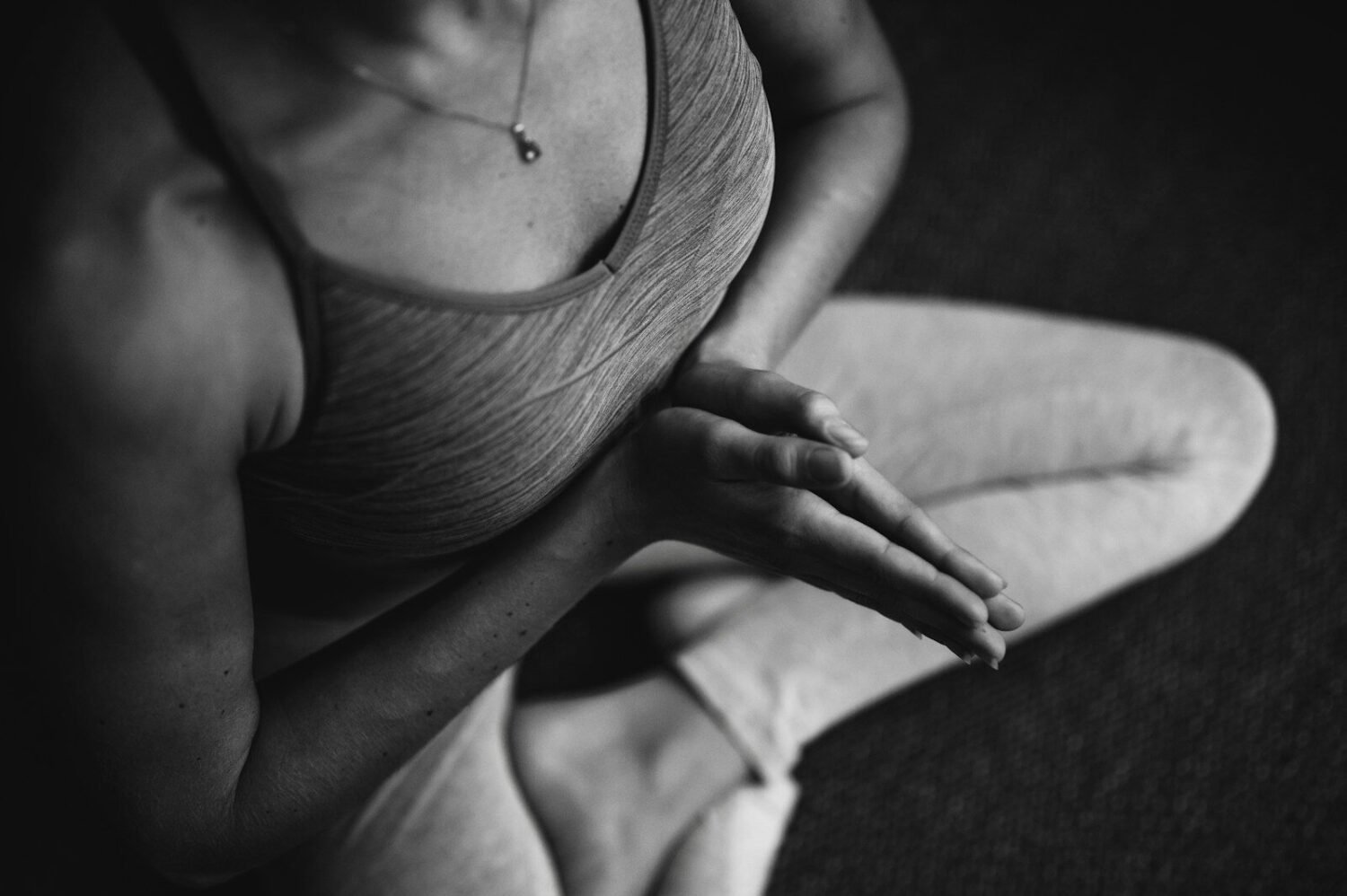
You do not have to wait for a session to begin.
The practices in this post require no equipment, no prior experience, and no particular belief system. They ask only one thing of you: a few minutes of genuine attention toward yourself.
If you are an existing client, these five practices will support and deepen the work already in motion. If you have never had a session and are simply curious about what energy healing feels like from the inside — this is your invitation to find out, in your own time, at your own pace.
Begin with one. Return to it for a few days. Then add another.
The body responds to consistency far more than intensity. Small and steady is always enough to begin.
This is the most immediate practice available to you, because it requires nothing except the awareness you already have.
Set a timer for two minutes. Sit quietly wherever you are. And simply listen — the way you might listen to a conversation happening in the next room — to the words your mind is currently using about your life, your circumstances, and yourself.
Most people, when they do this for the first time, are surprised by what they hear. The inner voice is often far more critical, far more resigned, or far more anxious than the face we present to the world. And because it is constant — running beneath every moment of every day — we have often stopped noticing it the way we stop noticing background noise.
Your subconscious mind receives every word of that inner conversation as instruction. The body organizes itself around the language it hears most consistently.
When the timer ends, choose one word that feels true and also steady. “Here.” “Willing.” “Open.” “Enough.” Speak it quietly — aloud or inward. Notice how your body responds to that single word compared to what was running before.
That difference, however subtle, is a new neural pathway beginning to form. Each time you practice, it strengthens.
Even two minutes. Even once a day. The body is listening.
Buy a notebook that feels good in your hand. Keep it somewhere visible — on your nightstand, beside your morning cup, on your desk. And write in it the way you would speak to someone who already loves you and has all the time in the world.
Here is why the pen matters specifically: the glide of the pen across the page adds to the release in a way the keyboard cannot replicate. The movement of the hand while thoughts dictate creates a physical channel — the body participating in what the mind is expressing. Typing engages the fingers. Writing engages the arm, the shoulder, the breath. It is a fuller, more embodied act of expression.
Write about how you are feeling. Write about what has been present lately that you have not yet given a name to. Write without punctuating, without correcting, without reading back until the timer ends. Allow the subconscious mind to express itself through the movement of your hand.
Set the timer for ten minutes. Write until it sounds.
You will frequently surprise yourself with what you know.
A prompt to begin with: “Something I have been carrying lately that deserves more of my attention is…”
Finish that sentence as many times as it wants to be finished. Then set the pen down and simply notice how your body feels compared to ten minutes ago.
Most of us have learned to relate to physical discomfort as a problem to be solved — something to medicate, stretch, ice, or push through. This practice invites a different quality of attention.
Find a place in your body that has been asking for your attention. It may be a place of recurring tension or discomfort. It may be a place that simply feels heavy or held. It may be somewhere you have stopped noticing because it has been present for so long.
Place your hand there. Breathe slowly. And ask — aloud or silently, with genuine curiosity rather than demand:
What have you been holding for me? How long have you been holding it? Are you ready to begin releasing it?
You are opening a conversation, not requiring an answer. The body responds to curiosity with a gentleness that analysis rarely receives. Sit for two or three minutes. Notice whatever arises — a feeling, a memory, an image, a simple sense of something present. Write it down afterward if that feels right.
A 37-year-old man once came to me to talk about his family. He never mentioned the arm he had been unable to fully straighten since a sports injury at 14. After his first session, he straightened it for the first time in 23 years — and then remembered, slowly, that it had been there all along. His body had been holding something that had nothing to do with the original injury and everything to do with a season of his life at 29 — being blamed, love unreceived, a quiet belief running beneath everything that no one cared.
The arm became the archive.
His body had been asking for this conversation for over two decades. It simply needed someone — including himself — to finally ask.
This one is simple, grounded in physiology, and consistently underestimated.
When emotional energy releases — whether in a session or through any of the practices in this post — the body benefits from being well hydrated. Water supports the body’s natural ability to clear, reset, and integrate. This is as true at the cellular level as it is at the energetic level — the two are not separate systems.
In the days following an energy healing session, drink more water than usual. In the days when you are actively working with these practices, the same applies.
The intention matters as well. There is a growing body of research — including the work of Dr. Masaru Emoto on the effect of intention on water’s molecular structure — suggesting that water responds to the energy it carries. Whether or not you find that research compelling, the act of drinking a glass of water slowly and with full attention — rather than absently, mid-task — is itself a practice of presence. And presence is the foundation of everything here.
Before you drink, pause for one breath. And offer the water, silently, one word: clarity, or ease, or simply thank you. Then drink it slowly.
This takes four seconds. It costs nothing. And it shifts the quality of your attention in a way that compounds across a day.
This practice is for the end of your day — the transition between the activity of living and the restoration of sleep.
Lie down or sit comfortably. Place one hand on your heart and one hand on your solar plexus — the space just above your navel. Close your eyes.
Take three slow breaths. On each exhale, offer your body one of these permissions — silently, with genuine intention:
I allow what was released today to continue releasing. I allow what is healing to continue healing. I allow what is shifting to continue shifting.
You are not forcing anything. You are simply reminding your subconscious mind — which continues its work through the night, reorganizing and integrating while the conscious mind rests — that it has full permission to proceed.
Healing is cumulative. It works in the quiet hours as much as the active ones. This practice honors that process and invites your body into the night as a collaborator rather than simply a vessel that needs to be recharged.
Three breaths. Three permissions. Two minutes at most.
The body does significant work while you sleep. Give it something worth working toward.
Each of these five practices does something specific: it opens a channel of communication between your conscious awareness and the deeper intelligence your body carries.
That communication is exactly what happens in an energy healing session — in a more structured, more precise, and more guided form. A session follows your body’s own intelligence through a systematic process, identifying what is held, releasing what is ready, and installing what is true. These practices prepare the ground for that deeper work, and they support its continuation long after the session ends.
If you have been working with these practices and feel something stirring — a readiness, a curiosity, a sense that there is more available — that feeling is worth honoring. It is your subconscious mind signaling that it is ready for the next layer.
You can read more about why emotional patterns persist even when insight and effort are already present — and what becomes possible when the root is finally addressed.
When you feel ready, sessions are available in person in Bowmanville and Toronto, and worldwide via Zoom. Bring exactly where you are. That is always enough to begin.
Sheila Marina is the founder of Planet of Peace Energy Healing and a certified Emotion Code, Body Code, and Belief Code Practitioner with over three decades of experience helping people understand what they carry — first in Children’s Services and now in energy healing. She sees clients in person in Bowmanville and Toronto, and worldwide via Zoom. planetofpeace.org