
By Sheila Marina, Planet of Peace Energy Healing
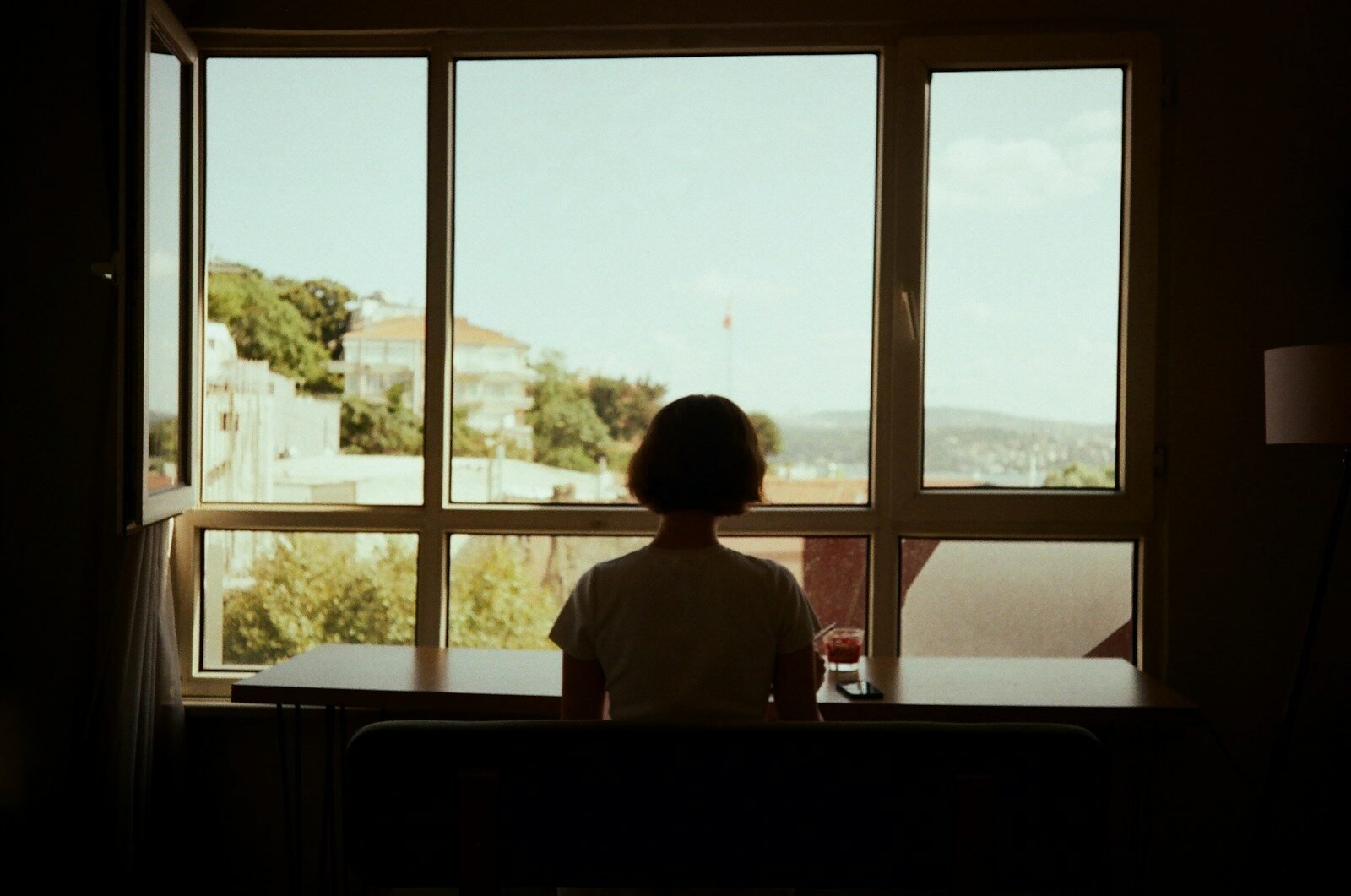
It arrived so gradually she almost missed it.
A meeting where she hesitated before speaking — something she had never done before. A decision she would once have made in minutes now circling in her mind for days. A quiet withdrawal from the version of herself she had always known — the confident one, the decisive one, the one who walked into rooms without first calculating whether she belonged there.
She was 48. The decline had been unfolding for approximately three years. Her doctor named it: anxiety.
She researched it. Read the descriptions. Recognized herself in the symptoms. And accepted the label — because it fit, and because having a name for something feels better than watching it erode you without language.
What the label did not offer was an explanation for why. Why now. Why her. Why a woman who had spent decades operating from a place of confidence was slowly losing access to the very quality that had defined her.
The answer was 38 years old. And it had been waiting, patiently, for someone to ask.
In her session, we followed her body’s intelligence through the Emotion Code to the root.
The trapped emotions were embedded at age 10. They were connected to an experience involving family members — a violation of her privacy and her safety during a moment when she was completely vulnerable. A moment a child should never have had to navigate.
Here is the detail that matters most for anyone reading this: she was uncertain whether the memory was real.
She reported a sense of something — an image, a feeling, a fragment — and immediately questioned it. Did that actually happen? Or did I just make it up?
This is one of the most common responses I witness in sessions when early material surfaces. The conscious mind, which was very young when the experience occurred, may not have formed a complete narrative memory. The subconscious mind — which records everything, including experiences that arrive before language, before context, before the ability to understand what is happening — holds the full imprint regardless.
The body does not require your conscious verification to carry something. It simply carries it. And it will continue carrying it — expressing it as anxiety, as declining confidence, as a slow withdrawal from the self you once knew — until it is identified and released.
We released the trapped emotions from age 10. She felt lighter by the end of the session. And a few weeks later, she contacted me to report something simple and profound: the confidence she once knew had fully returned.
The anxiety had been the messenger. The message was 38 years old. And once the message was received and the trapped emotions released, the messenger was no longer needed.
The conventional understanding of anxiety focuses primarily on management. Breathing techniques. Cognitive reframing. Medication that modulates the neurochemistry of the anxious brain. These approaches have genuine value — they reduce suffering and create space for a person to function.
What they rarely address is the question beneath the symptom: what is the anxiety actually responding to?
In my experience — across years of sessions with clients whose primary concern was anxiety — the answer is almost always specific. The anxiety is responding to something. A trapped emotion. An inherited pattern. An experience the body recorded and the mind moved past. A belief installed so early that it became invisible, operating beneath every decision and every relationship like a frequency the person stopped hearing because it had always been there.
Anxiety is the body’s alarm system. It is sophisticated, precise, and purposeful. When it activates without an obvious present-moment trigger — when you feel anxious in a safe room, in a stable relationship, in a life that by every external measure should feel secure — the alarm is responding to something internal. Something held. Something unresolved.
The alarm is doing its job. The question is: what is it responding to?
Every person is individual. Every session reveals a unique landscape. And across years of practice, three patterns appear with remarkable consistency when anxiety is the presenting concern.
Trapped emotions from childhood — especially before age 10. The nervous system is still forming its foundational understanding of safety during these years. Experiences that overwhelm a child’s capacity to process — a frightening event, a loss, a violation of trust, a moment of shame or confusion — can lodge in the body as trapped emotional energy. The child grows up. The body stays at the age when the experience occurred. And the anxiety that surfaces in adulthood is the body’s way of saying: something from that time is still active.
The most telling feature of childhood-rooted anxiety is that it often appears disconnected from current circumstances. The person’s life is objectively stable. Their relationships are healthy. Their career is secure. And yet the anxiety persists — because it belongs to a different time, a different room, a different version of themselves that the body is still protecting.
Inherited anxiety from the ancestral line. Epigenetic research confirms that anxiety-related stress responses can be passed across generations. In sessions, I regularly identify trapped emotions of fear, panic, worry, and hypervigilance that originated in an ancestor’s experience and traveled forward through the lineage. The client has never experienced the original event. Their body responds to it as though they have — because the emotional frequency arrived before they were born and installed itself in their nervous system as a baseline setting.
A client who has “always been anxious” — who cannot identify a specific origin, who has tried every approach and still carries the same low-frequency hum of unease — is often carrying something inherited. The anxiety is real. It simply predates them.
Recent significant stress that reactivated an older wound. A job loss, a health scare, a relationship change, a move — any significant stressor can activate trapped emotions that were dormant. The present event opens a door to something older, and the anxiety that emerges is a blend of both: the current stress and the unresolved material it disturbed. This is why anxiety can seem disproportionate to the triggering event — the body is responding to more than one thing simultaneously.
The woman in this story heard the same thing from every practitioner she consulted: unremarkable results. Good health. No clear explanation.
This experience — being told that nothing is wrong when something clearly feels wrong — is one of the most isolating aspects of chronic anxiety. It creates a secondary layer of distress: if nothing is wrong, then why do I feel this way? Is it in my head? Am I making this up?
The answer, consistently, is that the diagnostic tools being used are looking at the right body through the wrong lens. Blood work measures biochemistry. Brain scans measure structure. Sleep studies measure architecture. What none of these tools measure is the energetic and emotional layer — the trapped frequencies held in the nervous system, the inherited patterns running beneath conscious awareness, the thalamus holding an instruction from an ancestor, the ten-year-old’s experience still active in the body of a 48-year-old woman.
The absence of a conventional finding is an invitation to explore a different layer. And in my experience, that layer almost always has something to say.
This may be the most important section in this post. Because the woman whose confidence returned was not certain her memory was real — and the healing happened anyway.
The subconscious mind records everything. It does not require your conscious participation or your retrospective verification. It recorded what happened at age 10 with the same fidelity it records every experience — and it held the trapped emotions from that moment for 38 years, expressing them as a slow, steady erosion of the confidence that had once been her defining quality.
When those emotions were identified through the Body Code — through the precise, structured process of following the body’s own intelligence — and released, the confidence returned. The body did not need her to remember. It needed her to be willing.
If you carry a sense of something — a fragment, a feeling, an image that surfaces and retreats — and you have dismissed it because you cannot be certain it happened, consider this: your body is certain. It has been carrying the evidence for as long as the emotion has been trapped. Your willingness to follow what the body knows, even when the mind is uncertain, is enough to begin.
The next time anxiety arrives — the tightness, the quickened breath, the sense of something wrong that you cannot name — try this before reaching for any strategy to manage it.
Pause. Place one hand on your chest and one hand on your stomach. Breathe slowly.
Instead of asking how do I make this stop — ask:
How old is this feeling? Where in my body does it live most intensely? What is it trying to protect me from?
These questions change the relationship between you and your anxiety. They move you from adversary to listener. From manager to witness. The anxiety may not answer in words. It may answer in a sensation, a memory, a shift in the body, a number that arrives without explanation. Whatever comes, receive it with curiosity rather than judgment.
Then offer this:
I hear you. I am here. Whatever you have been guarding, I am ready to know.
This practice will not resolve the root on its own. What it will do is signal to your subconscious mind that you are willing to look at what has been held — and that willingness is the first and most essential step in any healing process.
If anxiety has been your companion for longer than you can explain — if it persists despite every conventional approach, every lifestyle adjustment, every effort to think your way through it — the body may be holding something that the mind alone cannot reach.
My article Why Emotional Patterns Repeat explores how trapped emotional frequencies persist in the body and create patterns that insight alone cannot resolve — and what becomes possible when the root is finally addressed.
When you feel ready to follow your anxiety to its source, sessions are available in person in Bowmanville and Toronto, and worldwide via Zoom.
Your anxiety has been trying to tell you something. It has been speaking in the only language it has — sensation, vigilance, the quiet erosion of the ease you once knew. It is ready to be heard. And when it is finally heard, something remarkable becomes possible.
The confidence you thought you lost may have been waiting for you all along.
Sheila Marina is the founder of Planet of Peace Energy Healing and a certified Emotion Code, Body Code, and Belief Code Practitioner with over three decades of experience helping people understand what they carry — first in Children’s Services and now in energy healing. She sees clients in person in Bowmanville and Toronto, and worldwide via Zoom. planetofpeace.org