
By Sheila Marina, Planet of Peace Energy Healing
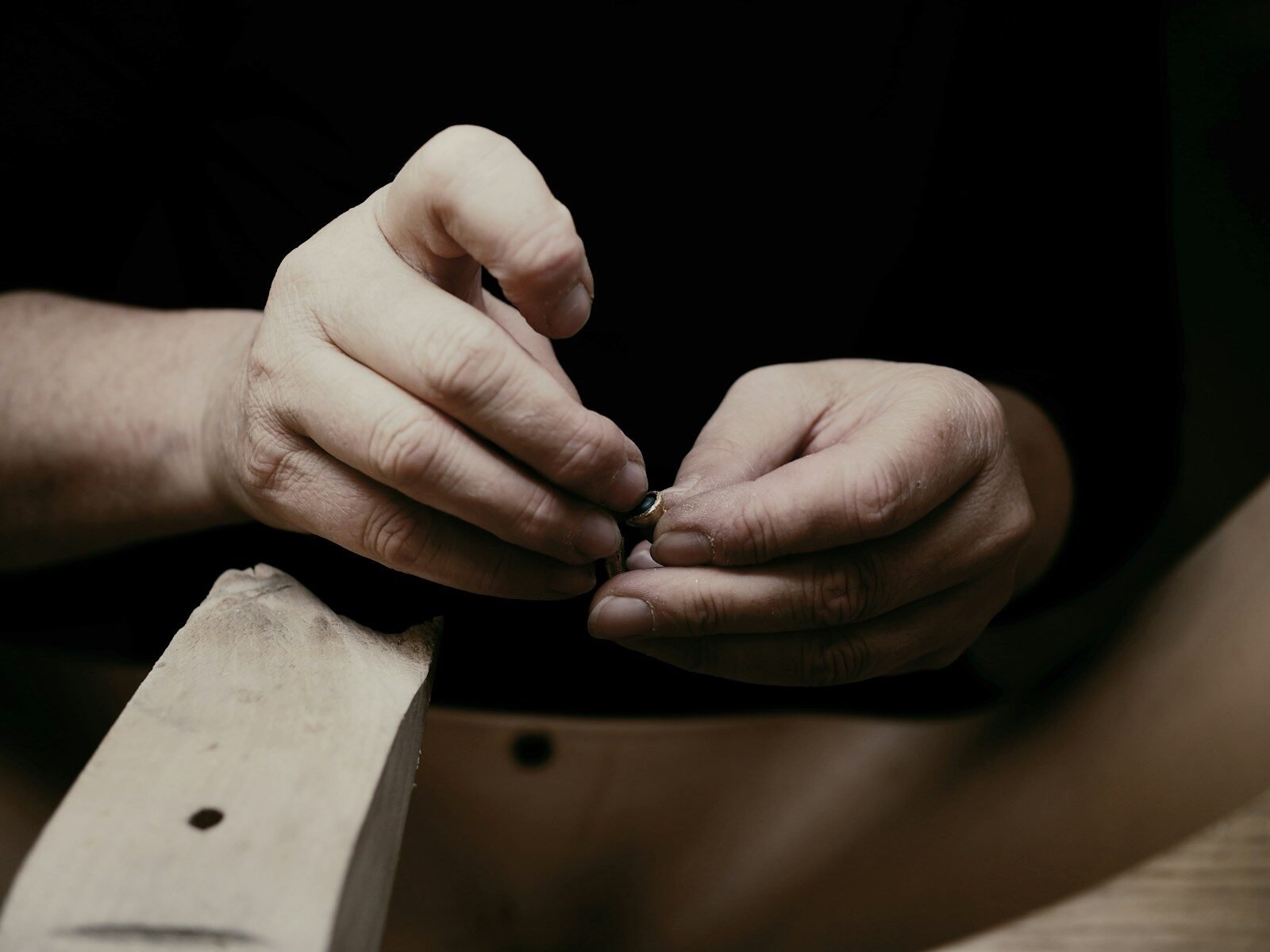
He was 72 when he asked the question.
It had been forming for decades — in the quiet of his woodshop, on the open road on his Harley, in the moments when the world was loud enough to drown out thought and still enough for something deeper to surface. He had felt it his entire life. He had simply never had the space — or the permission — to ask it aloud.
Was this actually possible? Was his mother really there?
She had died when he was seven years old, giving birth to his baby sister. The sister went to live with their grandparents. He would not meet her for another ten years. He grew up in the same house where he was born, with his father, in the quiet that follows a loss no one speaks about. He went to work at the same automotive company his father worked at. He married at 25. He did what men of his generation did: he carried on.
He carried on through four marriages, each one ending. Through a daughter — now 44 — who has chosen to have no relationship with him. Through jobs that took him around the world. Through a career that earned him respect wherever he went.
And through all of it — on a bicycle at 10, on a motorcycle at 40, in a woodshop at 65 — he felt her.
When he was 10, riding his bicycle, he heard her voice. It told him to turn. He turned. A moment later, two vehicles collided in the exact space where he would have been. He believes her voice saved his life.
When he was working at heights as a man, he suffered a workplace injury. In the moment of impact, he felt a warmth — a presence he recognized, unmistakable, the same frequency he had known since childhood. His mother, over him. Protecting him.
These experiences occurred across decades. They occurred in the places men go when they are alone — on the road, in the shop, on a quiet stretch of pavement where the only sound is the engine and the wind. He felt her in the solitary spaces. In the spaces where a man is allowed to feel without anyone watching.
He never told anyone. Because men of his generation — men of most generations — are not given language for this. There is no acceptable framework for a 40-year-old man on a Harley to say: I feel my dead mother’s presence and I believe she has saved my life more than once.
So he held it. For 65 years. The way men hold most of what they carry — silently, privately, in the body rather than in words.
Here is what most men absorb before they are old enough to question it:
Strength means silence. Vulnerability is weakness. Emotional expression — particularly grief, fear, tenderness, and the need to be held — is acceptable in childhood and increasingly unacceptable with every year that follows. By adolescence, the message is fully installed: handle it yourself. Move forward. Carry it quietly. And whatever you do, do not ask for help.
This conditioning is not subtle. It is delivered through language, through modelling, through the responses a boy receives when he cries, when he is afraid, when he reaches for comfort. The father who says “toughen up.” The coach who says “shake it off.” The peer group that enforces emotional stoicism through ridicule. The culture that celebrates the man who endures and is quietly suspicious of the man who admits he is struggling.
By adulthood, the conditioning has become invisible — because it has become identity. The man who carries everything in silence does not experience it as a learned behaviour. He experiences it as who he is. I am someone who handles things. I am someone who does not need help. I am someone who is fine.
His body tells a different story.
Men carry emotional weight with the same fidelity as women — the body does not discriminate by gender. What differs is where it tends to accumulate and how it tends to express itself.
The chest and heart. Men are disproportionately affected by heart disease — and while diet, exercise, and genetics all play a role, there is a growing body of research connecting emotional suppression to cardiovascular risk. A heart that has been energetically walled off — carrying years of unspoken grief, unexpressed love, and the constant muscular effort of holding everything in — is a heart under sustained, invisible strain. The Heart Wall, in my practice, is found in men as consistently as in women. The difference is that most men have no idea it is there.
The shoulders and upper back. The physical posture of carrying — broad shoulders, set jaw, the stance of a man who is holding something heavy — is often the literal truth. The weight of responsibility, of unspoken emotion, of decades of strength-as-silence settles in the shoulders and upper back as chronic tension that massage temporarily relieves and stress permanently reinstalls.
The stomach and digestive system. The gut processes emotion with the same sensitivity in men as in women. The difference is that men are less likely to connect digestive disturbance to emotional cause — because the cultural framework for that connection has been offered primarily to women. A man whose stomach has been unsettled for years may attribute it to diet, to stress, to aging. His body may be carrying something far more specific.
The jaw. Jaw clenching, teeth grinding, TMJ — these are remarkably common in men who carry their emotions in silence. The jaw is where the body holds what the mouth will not say. A man who has spent decades suppressing expression often carries the evidence in the muscles of his face without ever connecting the two.
The 72-year-old man who sat in my office had lived an entire life shaped by a single loss at age seven. His mother died. His sister disappeared into another household. He was left with his father in a house that had become quieter than any house should be.
Every marriage he entered was, at some level, the body’s attempt to restore what was taken. Every marriage that ended was the pattern repeating — the women in his life leaving, one by one, the way the first and most important woman left. His daughter’s refusal to know him echoed the same frequency: a female presence, withdrawing.
He was not aware of this pattern. He experienced each marriage as its own story, each ending as its own failure. The body, however, does not file experiences as isolated events. It files them by frequency. And the frequency of loss — specifically the loss of feminine presence, of maternal warmth, of the woman who was supposed to stay — had been running beneath every relationship he entered for over six decades.
He came to me in retirement, with time to sit with what had always been present and never been examined. The question about his mother’s presence was the door. Behind it was everything he had never been allowed to feel: the grief of a seven-year-old boy who lost the most important person in his world and was expected to carry on as though the world had not just ended.
In his session, we followed his body’s intelligence to the places where the original loss was still held. The grief of the seven-year-old. The confusion of losing his sister to another household. The silence of a home where a father worked and a son followed and neither one spoke about the woman who was missing from every room.
As each trapped emotion was identified — named with precision, located in the body, connected to its origin — something in him settled. The naming itself was powerful. A man who had never spoken about what he carried was hearing his own body speak it, clearly and specifically, for the first time.
And his question — was this actually possible? Was she really there? — was held with the respect it deserved. His experience of his mother’s presence across 65 years was real to him. It had been consistent, specific, and in at least one instance, life-saving. Whether it is explained through the language of energy, of spirit, of the electromagnetic field that the heart generates and that love imprints upon — the felt experience was genuine. And a man who has carried something genuine in silence for six decades deserves to have it witnessed rather than analyzed.
I want to speak directly to the men reading this — or to the women reading this who love a man who carries his weight in silence.
Energy healing is available to you. The Emotion Code, Body Code, and Belief Code make no distinction between male and female bodies. The trapped emotions are identified with the same precision. The releases are equally effective. The belief statements that arrive through the chakras are equally profound.
What differs is the threshold. The willingness to walk through the door, to sit in the chair, to say Tell Me Everything — or to simply sit quietly and allow the body to speak for itself — requires a man to step outside the conditioning he has absorbed since childhood. It requires him to challenge the deepest instruction his nervous system ever received: handle it yourself.
Here is what I have witnessed, consistently, across every man who has sat in my office: the moment he allows himself to be held by the process — the moment the body is asked what it is carrying and begins to answer — something in him releases that has been waiting decades for permission.
The firefighter whose children noticed he was different. The executive who discovered his Heart Wall was built at 18. The man whose frozen elbow held the emotions of his late twenties. The twin who carried guilt for 22 years over words spoken in the back seat of a car.
Every one of these men would tell you the same thing: I wish I had come sooner.
If you are a man reading this — or if you are reading this with a specific man in mind — this practice is a beginning. It requires nothing except two minutes and a willingness to listen.
Sit somewhere private. A workshop. A parked car. A quiet room. Wherever you feel most yourself.
Place one hand on your chest. Close your eyes. Breathe slowly.
And ask — silently, with genuine curiosity:
What am I carrying that I have never told anyone?
You do not need to answer aloud. You do not need to tell anyone what surfaces. You simply need to let the question land in your body and notice what responds. A tightness. A memory. A feeling that rises and passes. A name. A face. A moment from a long time ago that your body has been holding while your life moved forward.
Notice it. Acknowledge it. And offer this:
I am allowed to feel this. I am allowed to carry this differently. I am allowed to ask for help.
These three sentences may be the most unfamiliar words your nervous system has ever received. Speak them anyway. Your body has been waiting to hear them for longer than you know.
If you have been carrying something in silence — grief, guilt, a presence you have never spoken about, a loss you were expected to move past, a weight that has been with you so long it feels like part of who you are — it can be identified, named, and released.
My article Why Emotional Patterns Repeat explores how the body holds what the mind moves past — and why the patterns we carry persist until they are addressed at the level where they actually live.
When you are ready — on your own terms, at your own pace — sessions are available in person in Bowmanville and Toronto, and worldwide via Zoom.
You have been strong for a very long time. Strength brought you here. And the strongest thing you may ever do is sit down, place your hand on your chest, and let your body finally say what it has been holding.
Tell me everything. Or tell me nothing. Either way — your body already knows.
Sheila Marina is the founder of Planet of Peace Energy Healing and a certified Emotion Code, Body Code, and Belief Code Practitioner with over three decades of experience helping people understand what they carry — first in Children’s Services and now in energy healing. She sees clients in person in Bowmanville and Toronto, and worldwide via Zoom. planetofpeace.org