
By Sheila Marina, Planet of Peace Energy Healing
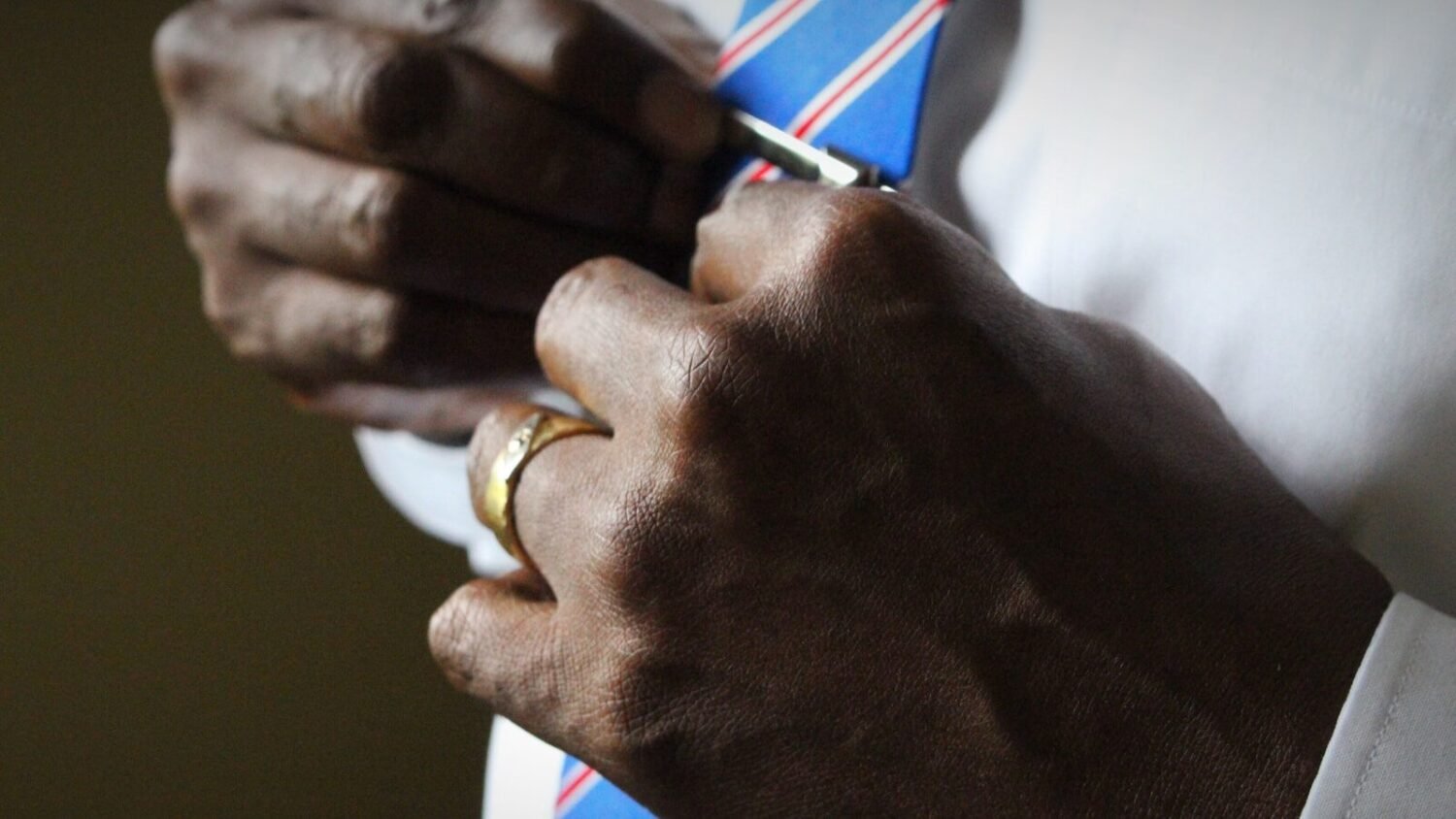
He was 47. Tall, broad-shouldered, the kind of presence that fills a room before he speaks a word.
He sat down in my office and began telling me his story the way high-functioning people often do — with a catalogue of accomplishments delivered in a tone that suggested they were simply what happened, rather than anything remarkable.
Class valedictorian. Star track and field athlete. Student council president. A master’s degree followed immediately by a six-figure role. Promotions that came steadily, each one accompanied by more responsibility, more visibility, more people relying on him every day.
From the outside, his life was a case study in capability. From the inside, he was exhausted in a way that no vacation, no raise, and no recognition could touch.
Here is the detail that stopped me.
He told me that as early as student council — the year he was voted in as president — he remembered sitting with a quiet, private thought: do I have what it takes to be a successful leader?
He felt that same question when he graduated at the top of his class. When he received his first promotion. When he was given his first team to manage. When he was offered the role that doubled his salary and tripled his scope.
Every time the world chose him, something inside him paused and wondered whether the world had made a mistake.
This is one of the most common and least visible experiences carried by high-performing professionals. The external evidence of competence is overwhelming. The internal experience of doubt is equally persistent. And because the gap between the two is so confusing — how can I be succeeding and still feel this way? — most people never speak about it. They simply carry it. Quietly. For decades.
His physical health had begun declining approximately four years earlier — right around the time he and his wife were making one of the most significant decisions of their lives.
Their son’s respiratory system was struggling in this climate. His wife and son had moved to a warmer, more suitable environment overseas, and he was now planning to join them — continuing his corporate career from a different continent while navigating what that transition would mean for every person who depended on him professionally.
The decision carried implications for a multitude of people. His family. His team. His organization. And he was holding all of it — as he had always held everything — with the steady, reliable competence that everyone around him had come to expect.
His body was telling a different story. Four years of declining health. Increasing fatigue. A heaviness that settled into his frame in a way that his broad shoulders could no longer disguise.
The exhaustion of a high-functioning person is rarely about the volume of work. It is about the weight of being the person everyone turns to — combined with the private, unspoken question of whether you are truly equal to what is being asked of you. Those two forces, pressing simultaneously in opposite directions, create a particular kind of depletion that rest alone cannot resolve.
The body was carrying what his professional composure would never allow to surface.
In his session, we followed his body’s intelligence to the source — and what it offered was something his conscious mind had never connected to his current exhaustion.
Multiple trapped emotions, from his family, on his wedding day.
The day he married the woman he loved — a woman from overseas, a union that carried its own complexity of cultures, expectations, and family dynamics — his body recorded the emotional frequencies present in the room. The feelings his family carried. The unspoken tensions. The weight of what was felt and never said.
Those emotions lodged in his body and traveled with him through every subsequent year — through every promotion, every decision, every moment of standing in a room full of people who needed him to be steady.
When those trapped emotions were identified and released, we closed the session with a guided meditation — connecting his present self with the younger version of himself who stood at that altar, carrying more than he knew. Past and present, meeting in a space of understanding and release.
He reported afterward feeling something he described simply as clarity. The heaviness of the decision that had been pressing on him for years felt different — still significant, still complex, and now approachable. The fog had lifted enough to see the path.
This man’s experience is not unusual. It is, in fact, one of the most consistent patterns I see in my practice.
High-functioning people — executives, entrepreneurs, team leaders, the person in the family everyone calls when something needs handling — carry a particular kind of invisible burden. They are the ones who appear most capable and are therefore given the most to carry. And because they carry it well, the weight is rarely noticed by anyone other than their own body.
Here is how this pattern tends to present:
The performance is flawless. The body is failing. Chronic fatigue, recurring illness, digestive issues, sleep that never fully restores. The body is signaling that the demand has exceeded the capacity — and the capacity was never as limitless as it appeared.
The doubt is hidden beneath the competence. Achievement and self-doubt are not opposites. They frequently coexist, reinforcing each other in a cycle that is both productive and corrosive. The doubt drives the performance. The performance temporarily quiets the doubt. And the cycle continues, demanding more each time.
The needs of others have completely eclipsed their own. The capable person has been so thoroughly defined by their usefulness to others that their own needs have become invisible — to those around them and, eventually, to themselves. The exhaustion they feel is partly the weight of the work and partly the weight of having disappeared inside their own competence.
The breaking point is often a decision, not a crisis. It is rarely a dramatic collapse that brings the high-functioning person to healing. It is a moment of reckoning — a decision that requires them to choose their own wellbeing, often for the first time, and the realization that they cannot make that choice clearly while carrying everything they have been carrying.
If you recognize yourself in this post, this practice is for you. It takes three minutes. It may be the first three minutes you have given yourself in a very long time.
Sit somewhere quiet. Close your eyes. Place one hand on your chest and one hand on your stomach.
Breathe slowly. And ask yourself — with the same honesty you bring to every professional challenge:
What am I carrying right now that I have never spoken about aloud?
Allow whatever surfaces to simply be present. You do not need to solve it. You do not need to act on it. You simply need to acknowledge that it exists — and that your body has been holding it on your behalf, faithfully, for however long it has been there.
Then ask:
What would it feel like to set one thing down?
Sit with that image. One piece of the weight, placed gently on the ground beside you. Notice how your body responds to even the possibility of release.
That response — that quiet shift in your shoulders, your chest, your breath — is your nervous system telling you something important: it is ready.
If you have spent your career — and perhaps your life — being the person who gives, who holds, who manages, who leads — there is something worth considering: the same intelligence that makes you extraordinary at carrying others is available to carry you. Your body holds the same wisdom you bring to every boardroom and every difficult conversation. It simply needs to be asked.
My article Why High-Functioning People Carry Invisible Nervous System Fatigue explores this pattern in depth — and why the most capable people are often the last to recognize the cost of their own competence.
When you are ready to set something down — even one thing — sessions are available in person in Bowmanville and Toronto, and worldwide via Zoom.
You have been the most capable person in the room for a long time. You are allowed to also be the one who is held.
Sheila Marina is the founder of Planet of Peace Energy Healing and a certified Emotion Code, Body Code, and Belief Code Practitioner with over three decades of experience helping people understand what they carry — first in Children’s Services and now in energy healing. She sees clients in person in Bowmanville and Toronto, and worldwide via Zoom. planetofpeace.org