
By Sheila Marina, Planet of Peace Energy Healing
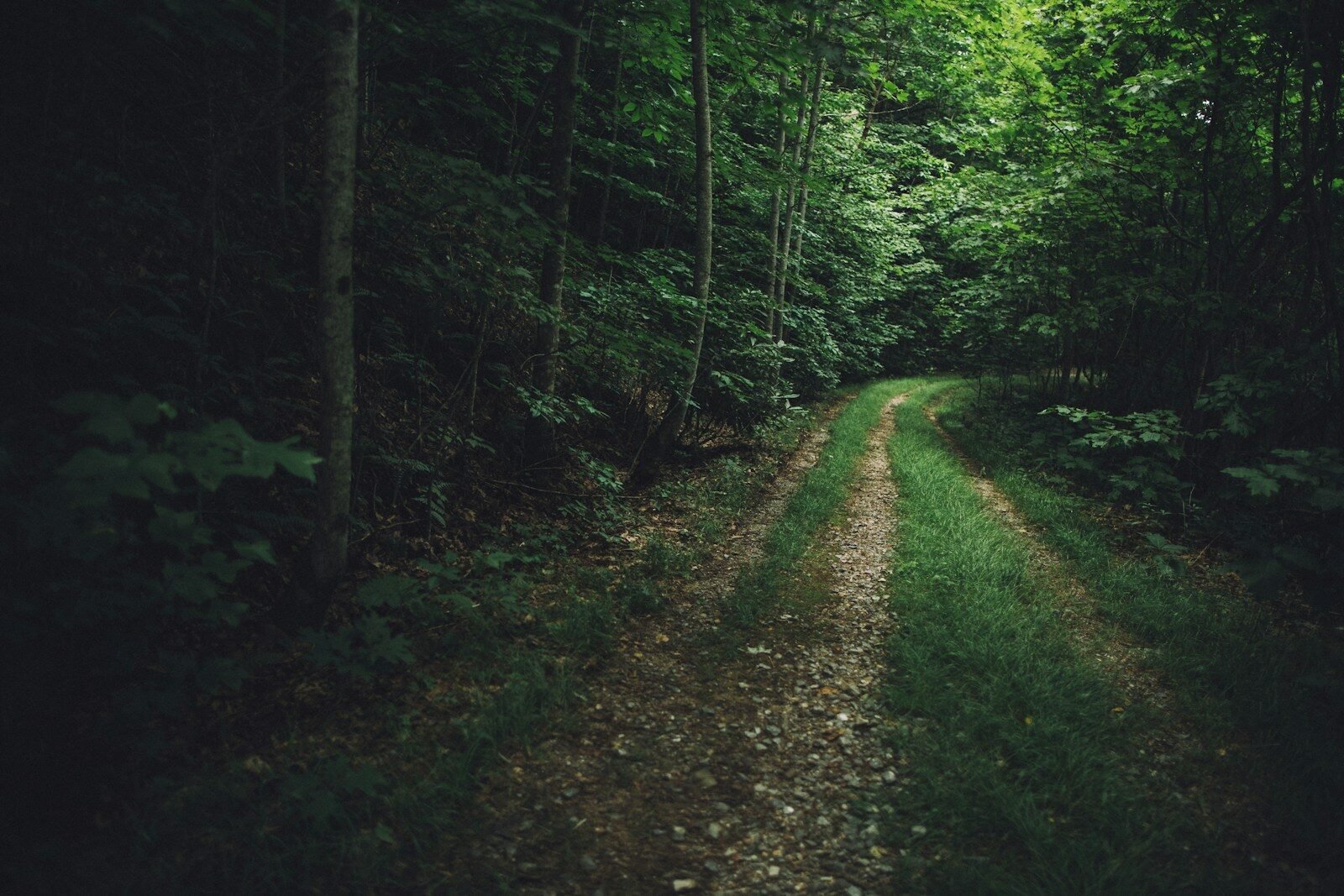
My son was eight years old when the forest changed everything.
My company had gone on strike. The paycheques were reduced to minimum strike pay. There was no end in sight and a young, active boy who needed something to do after school and on weekends. I needed a low-cost activity — something that would fill the hours meaningfully without filling the budget.
He had enjoyed fishing years earlier when we went as a family. So each evening, we drove to the local creeks. And to reach one of them, we had to travel through an extensive forest.
I was not looking for a revelation. I was looking for a creek.
What I found instead was my son — more present, more alert, more himself than I had seen him in the structured environments where he spent most of his days.
He was a child whose school had concerns about his social skills. He struggled in environments built around stillness, compliance, and sequential instruction. The systems designed to educate him had begun, quietly and with the best of intentions, to define him by what he could not do within their walls.
In the forest, none of that existed.
He answered my questions clearly. He asked questions of his own — curious, engaged, reaching outward instead of pulling inward. His body moved differently among the trees. His breathing changed. His eyes were brighter. He was not performing wellness. He was simply, naturally, arriving in himself.
And it happened every time.
Each visit to the forest produced the same shift. More presence. More connection. More of the boy I knew him to be — the one the classroom could not quite reach. The consistency of the change was impossible to ignore. Something in the environment itself was doing what no intervention, no behavioural strategy, and no well-meaning professional had been able to do.
The forest was not treating my son. The forest was meeting him — at a frequency his nervous system recognized and responded to.
That observation became the catalyst for everything that followed.
What I witnessed with my son sent me searching for an explanation. I found it in ecopsychology — the study of the relationship between human wellbeing and the natural environment — and I trained as a practitioner because I needed the language and the research to support what I had seen with my own eyes.
The science is substantial and growing.
Dr. Qing Li, a physician and researcher at Nippon Medical School in Tokyo, has spent decades studying the practice of shinrin-yoku — forest bathing. His research demonstrates that spending time among trees measurably reduces cortisol levels, lowers blood pressure, strengthens immune function, and shifts the nervous system from sympathetic activation — the fight-or-flight state — toward parasympathetic regulation, the state of rest, recovery, and integration.
The mechanism is partly chemical. Trees release organic compounds called phytoncides — volatile oils that serve as the tree’s own immune system. When humans breathe these compounds, they produce measurable increases in natural killer cells — the immune cells responsible for fighting infection and disease. A single day spent in a forest can elevate natural killer cell activity for up to seven days afterward.
The mechanism is also electromagnetic. Every living system generates a field — trees included. Research by organizations including the HeartMath Institute has explored how the electromagnetic fields generated by natural environments interact with the human heart’s own field, producing states of coherence, calm, and physiological balance that are difficult to replicate in built environments.
And the mechanism is acoustic. Birdsong activates the parasympathetic nervous system. The sound of moving water stimulates relaxation responses. The absence of urban noise — traffic, machinery, notification tones — allows the auditory processing system to rest in a way that most modern humans rarely experience.
What this means in plain language: the forest is a healing environment at the level of biology, electromagnetic frequency, and nervous system regulation. It is measurable, repeatable, and available to anyone who walks among the trees.
The research I brought to my son’s teachers was compelling — and it remains one of the most underutilized bodies of evidence in modern education.
Studies in outdoor and forest-based education have consistently demonstrated that children learning in natural environments absorb lessons up to five times faster than their in-classroom counterparts. The improvements span attention, retention, creative problem-solving, and — perhaps most significantly — social cooperation and emotional regulation.
There are now schools around the world operating primarily in forest settings. These programs report reductions in behavioural challenges, improvements in peer relationships, and academic outcomes that match or exceed those of traditional classrooms — achieved in environments that look nothing like a traditional classroom.
The children who benefit most consistently from these settings are often the ones who struggle most in conventional environments. The restless ones. The ones whose bodies need to move. The ones whose nervous systems were designed for open space, sensory richness, and the kind of learning that happens through exploration rather than instruction.
My son was one of those children. The forest saw what the classroom could not.
This understanding — that nature is itself a therapeutic environment — is now woven into my practice.
I offer walking sessions in the forest. The structure is simple and deeply grounded.
We begin by walking together, slowly, among the trees. This is where “Tell Me Everything” unfolds — not in a chair across from me, but side by side, moving through a living environment that is already settling the nervous system before a single word of energetic work has begun.
There is something about walking that unlocks honesty. The absence of eye contact — the shared forward gaze of two people moving in the same direction — removes the pressure of being watched and replaces it with the ease of being accompanied. Clients often share more freely among the trees than they do in any office setting.
When the conversation arrives at its natural close, we find a quiet place to sit. I work through the charts — the Emotion Code, Body Code, and Belief Code — the same precision applied in any session, held now within the canopy of the forest.
Then we walk back to the car.
That return walk is the integration. The body has just released something. The forest surrounds it. The feet are moving on the earth. The air is carrying phytoncides. The birdsong is activating the parasympathetic system. The entire environment is supporting the work that was just completed.
It is, consistently, one of the most profound session formats I offer. The forest does not replace the energetic work. It holds it. The way a good container holds what is placed inside it — with steadiness, with patience, with no agenda of its own.
You do not need a practitioner, a booking, or a plan to begin receiving what the forest offers. You simply need to go.
Find a place with trees — a forest, a park, a trail, a wooded path. Leave your phone in your pocket or your car. Walk slowly.
As you walk, bring your attention to three things:
What you hear. The birdsong, the rustle of leaves, the sound of your own footsteps. Let the sounds arrive without labeling them. Simply receive.
What you feel on your skin. The air moving across your face and hands. The temperature. The quality of the light filtering through the canopy. Your body is already responding to these frequencies — you are simply allowing yourself to notice.
What you smell. The earth, the bark, the particular scent of living green. Each inhale is carrying phytoncides into your body. Your immune system is already responding.
Walk for as long as you have. Ten minutes is enough to shift the nervous system measurably. Twenty minutes deepens the effect. Forty minutes begins to approach what Dr. Li’s research identifies as the threshold for significant physiological change.
When you are ready to return, pause. Place your hand on the nearest tree. And offer — silently, with genuine gratitude:
Thank you for holding this space.
Then walk back. Notice how you feel compared to when you arrived. That difference is the forest’s gift. It has always been available. It is waiting for you every time.
If something in this post has resonated — if you have felt the pull of the forest, or recognized in your own child the shift that happens when the walls come down and the sky opens — I invite you to explore this work in its fullest expression.
My article Why Emotional Patterns Repeat explores how the body holds what the mind has moved on from — and why the right environment, combined with precise energetic work, creates the conditions for release that understanding alone cannot provide.
The forest has been healing long before any of us arrived. It asks nothing of you except your presence. And your presence — quiet, willing, unhurried — is always enough.
Sheila Marina is the founder of Planet of Peace Energy Healing and a certified Emotion Code, Body Code, and Belief Code Practitioner with over three decades of experience helping people understand what they carry — first in Children’s Services and now in energy healing. She sees clients in person in Bowmanville and Toronto, and worldwide via Zoom. planetofpeace.org