
By Sheila Marina, Planet of Peace Energy Healing
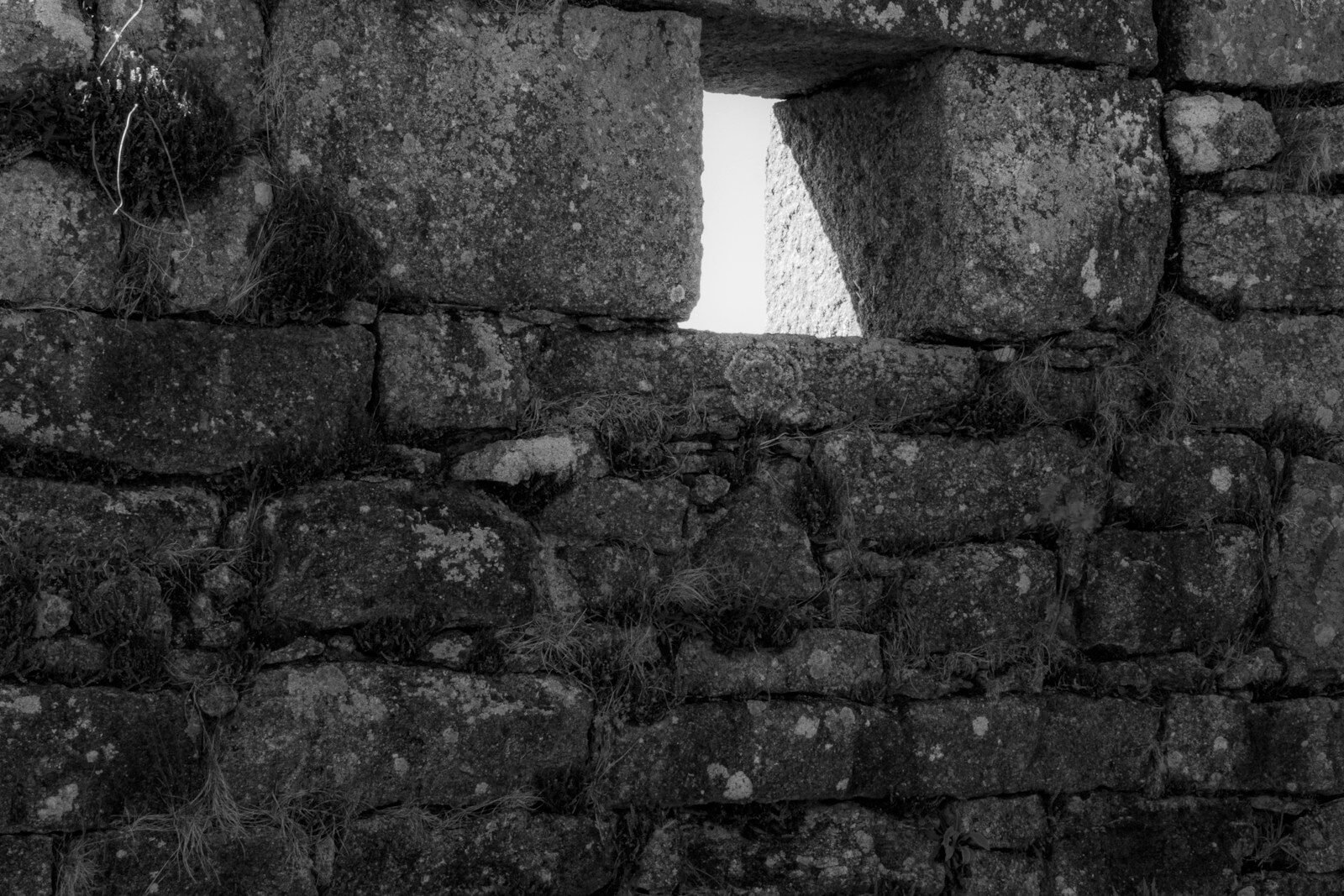
You may have been told — by a partner, a friend, a therapist, or simply by the quiet voice inside you that notices things — that you are difficult to reach.
That there is something between you and the people you love. A guardedness. A reserve. A quality of holding back that is present even in your most intimate moments. You give, and you give generously — and yet something essential stays behind a barrier that neither you nor the people closest to you can fully name.
You are aware of it. You may have spent years trying to dismantle it through conversation, through therapy, through sheer willpower. And still it persists — because it was never built with the conscious mind. It was built by a part of you that was trying, with everything it had, to keep your heart safe.
It is called a Heart Wall. And understanding what it is — and what it has cost you to carry it — may change the way you see every relationship you have ever had.
The concept of the Heart Wall was developed by Dr. Bradley Nelson, the creator of the Emotion Code, through years of clinical observation and energetic practice.
Here is the principle in its simplest form: when the heart experiences significant emotional pain — heartbreak, betrayal, loss, rejection, humiliation — the subconscious mind responds by building a protective barrier around the heart using the only material available to it: trapped emotional energy.
Each trapped emotion becomes a layer. One experience of grief adds a layer. One experience of rejection adds another. A betrayal adds several. Over time — and often beginning far earlier in life than the conscious mind suspects — these layers accumulate into a wall: an energetic structure surrounding the heart, built entirely from the emotional frequencies the body recorded during its most painful moments.
The Heart Wall is not a metaphor. In the Emotion Code framework, it is an identifiable, measurable energetic structure that can be found through muscle testing and dismantled layer by layer, one trapped emotion at a time.
And here is the part that changes everything: the Heart Wall was built to protect you. And it is also the reason you cannot fully connect.
He was 36. An executive. Successful, driven, articulate. He came to me describing the weight of a demanding career — the pressure, the decisions, the constant performance required of someone at his level.
He assumed the heaviness he carried was professional. Occupational stress. The natural consequence of a high-stakes career.
Using the Emotion Code, we identified a Heart Wall. It consisted of twenty-four trapped emotions — every single one of them originating from age 18.
He was genuinely surprised. His career began well after 18. The stress he attributed to his professional life had nothing to do with his professional life.
At 18, he was leaving for university. His high school sweetheart was staying in their hometown to help with the family business. The relationship that had defined his adolescence — the first love, the one that teaches you what it means to hold someone and be held — was ending because life was carrying them in different directions.
Twenty-four emotions. All from that departure. All layered around his heart, one on top of another, forming a wall that had been standing for eighteen years by the time he sat down in my office.
He had been living the second half of his life so far — every relationship, every moment of intimacy, every attempt to connect — behind a barrier his subconscious built at 18 to protect him from ever feeling that kind of loss again.
The wall did its job. It protected him from pain. And it also blocked what it was designed to block — the full experience of love, of vulnerability, of being truly reached by another person.
As each trapped emotion was identified and released — all twenty-four, layer by layer — something shifted in his posture, in his breathing, in the way he held himself in the chair. When the final layer was cleared, he stretched. He took a full breath. And he said, simply, that he felt much lighter than when he arrived.
I told him something I share often with clients at moments like this: “When you change the way you look at things, the things you look at change.”
He looked at his career differently. He looked at his relationships differently. He looked at the eighteen-year-old boy who built the wall differently — with understanding rather than frustration, with gratitude for the protection rather than resentment for the cost.
The wall had served him. And it was time to let it go.
Heart Walls are remarkably common. Dr. Nelson estimates that approximately 93% of people carry one. In my own practice, I find them with extraordinary consistency — in men and women, across every age, and frequently in people who appear emotionally healthy and relationally successful on the surface.
The Heart Wall often begins forming in childhood — during the earliest experiences of emotional pain. A parent’s absence. A moment of rejection at school. A loss that arrived before the child had any framework for processing it. The subconscious mind, recognizing that the heart has been hurt, begins building protection immediately.
Each subsequent heartbreak adds more layers. A teenage breakup. A friendship that ended badly. A betrayal in early adulthood. A marriage that slowly dimmed. A parent who died carrying words that were never spoken between you.
By the time most adults arrive in my practice, the Heart Wall has been accumulating for decades. It may consist of five layers or fifty. Each layer is a specific trapped emotion, identifiable by name, by the age it was installed, and by the experience that created it.
The person carrying the wall often has no awareness of its existence. They simply know that something stands between them and the full experience of connection. They describe it in different ways:
“I feel guarded and I can’t explain why.”
“I love my partner, and yet I can’t seem to let them all the way in.”
“People tell me I am hard to read.”
“I want closeness and I withdraw from it at the same time.”
Each of these is the Heart Wall expressing itself — the subconscious mind’s protection operating exactly as designed, keeping the heart safe at the cost of keeping it enclosed.
The effects of Heart Wall removal are among the most consistently reported transformations in my practice. Clients describe:
Relationships deepening. Partners notice a difference — often without being told about the session. The quality of presence changes. The guardedness softens. The person who was always slightly behind a barrier is suddenly, unmistakably, here.
Emotional range returning. The ability to feel fully — joy, tenderness, grief, gratitude — expands. Emotions that had been muted by the wall’s filtration system arrive at their true intensity. For many clients, this is the first time they have felt the full spectrum of their own emotional life in years.
Physical changes. Chest tightness that had been attributed to stress eases. Breathing deepens. The posture opens. The body, no longer energetically bracing around the heart, reorganizes into a more expansive, more relaxed configuration.
A sense of lightness that is difficult to articulate. The most common words I hear after a Heart Wall session: lighter. As though something has been lifted from the centre of the chest that the person had stopped noticing because it had been there so long.
Career and creative breakthroughs. The heart is the seat of passion, purpose, and authentic self-expression. When the wall comes down, many clients find that their professional life shifts — new clarity about direction, new willingness to take risks, new creative energy that had been muted by the wall’s dampening effect.
This is a gentle self-inquiry. It cannot identify a Heart Wall with the precision of a session — only muscle testing and the Emotion Code can do that. What it can do is help you become aware of what may be present.
Sit quietly. Place both hands over your heart. Close your eyes. Breathe slowly.
Ask yourself these questions, one at a time, sitting with each one long enough to feel rather than think the answer:
Do I feel fully open to receiving love — or does something in me hold back?
When someone gets close, does my body move toward them or subtly brace?
Is there a quality of guardedness in my closest relationships that I cannot seem to release through understanding alone?
How old was I when I first learned that love could hurt?
If the answers to these questions carry weight — if they land in your chest rather than your mind — something may be present around your heart that is worth exploring.
Place your hands on your heart and offer this:
I am grateful for the protection you have given me. I understand why you built this wall. I am ready to discover what is on the other side.
That readiness — spoken to the part of you that built the wall in the first place — is the beginning of the conversation that leads to its release.
If something in this post has resonated — if you recognize the guardedness, the reservation, the invisible barrier between you and the people you love — the Heart Wall can be identified and removed with precision and care.
My article The Missing Skill in Modern Relationships explores how the emotional layer beneath communication — the one most relationship advice never reaches — is where the real work of connection lives.
When you are ready to find out what your heart has been carrying and what it has cost you, sessions are available in person in Bowmanville and Toronto, and worldwide via Zoom.
Your heart built the wall because it needed to. It kept you safe during a time when safety was what mattered most. And now — on the other side of that protection — something is waiting that the wall was never designed to let through.
You are ready to find out what it is.
Sheila Marina is the founder of Planet of Peace Energy Healing and a certified Emotion Code, Body Code, and Belief Code Practitioner with over three decades of experience helping people understand what they carry — first in Children’s Services and now in energy healing. She sees clients in person in Bowmanville and Toronto, and worldwide via Zoom. planetofpeace.org